


What Are the Best Things to Buy in Marrakech ?
Some objects are particularly representative of Moroccan handicrafts. Their appeal lies as much in how they are made as in how you intend to use them.
Souvenir | Why buy it? |
|---|---|
Moroccan rugs | For their patterns, textures and weaving techniques |
Pottery and ceramics | For tableware and interior decoration |
Babouches and leather goods | For traditional leather craftsmanship |
Lanterns and metalwork | For their intricate decorative details |
Spices and natural products | For Moroccan flavours and wellness traditions |
Kaftans and textiles | For their fabrics, embroidery and traditional cuts |
A small ceramic bowl can be just as meaningful as a large rug, provided you understand what you are buying.
Which Moroccan Handicrafts Are Worth Buying in Marrakech?
Moroccan Rugs: Beni Ourain, Azilal and Kilims
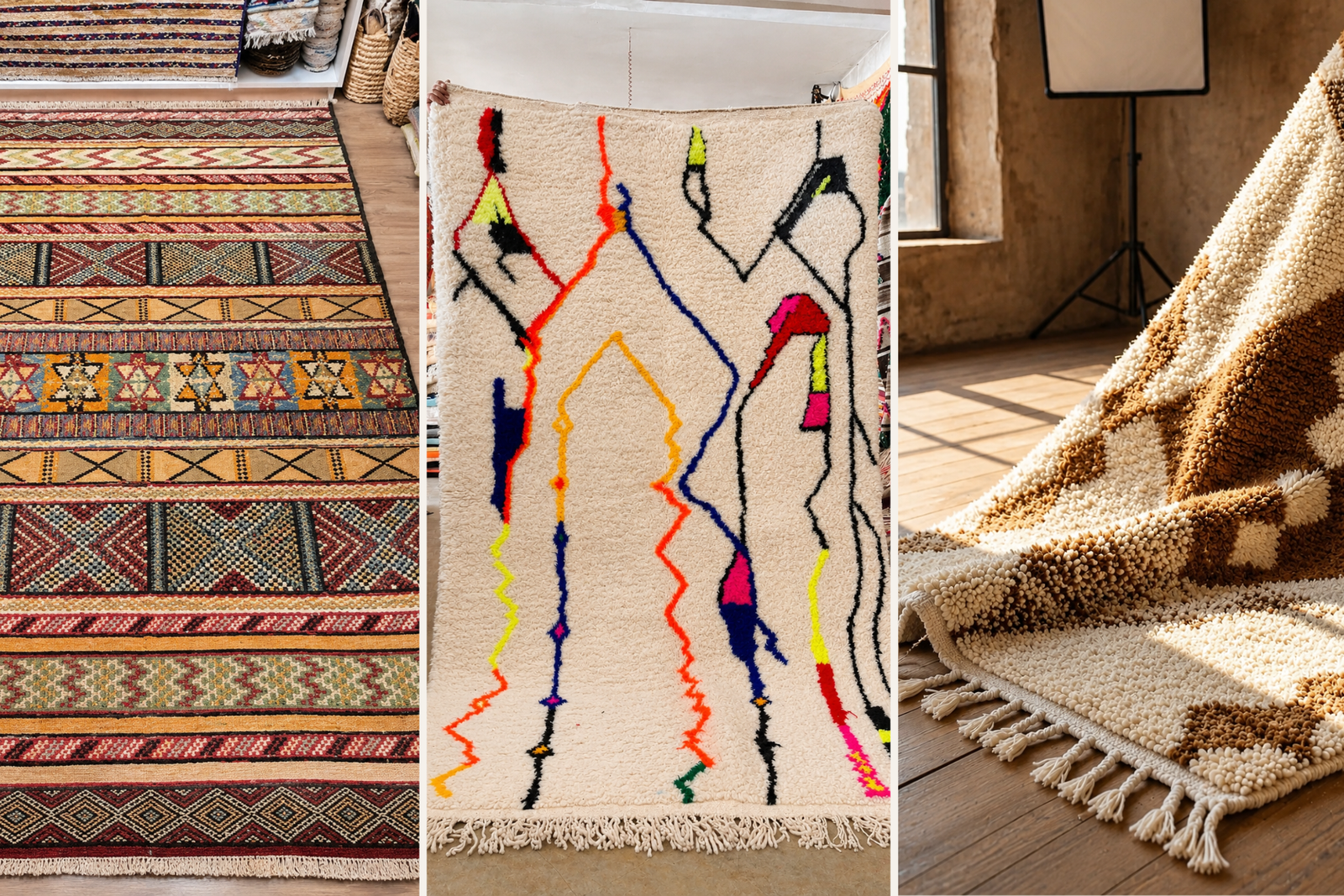
Rugs are among the most recognisable purchases in Marrakech. Throughout the Medina, specialist shops offer pieces from different regions of Morocco, each with its own weaving traditions.
Beni Ourain rugs are particularly known for their thick wool and geometric patterns, often set against a light background. Azilal rugs frequently feature freer, more colourful compositions. Kilims, generally flatwoven, are thinner and often easier to transport.
Before purchasing an authentic Moroccan rug, ask about its origin, materials, dimensions and weaving technique. Turn it over to examine the construction and ask whether it was handmade. Small irregularities may reflect artisanal production, although they do not prove authenticity on their own.
Leather Goods: Babouches, Bags and Poufs
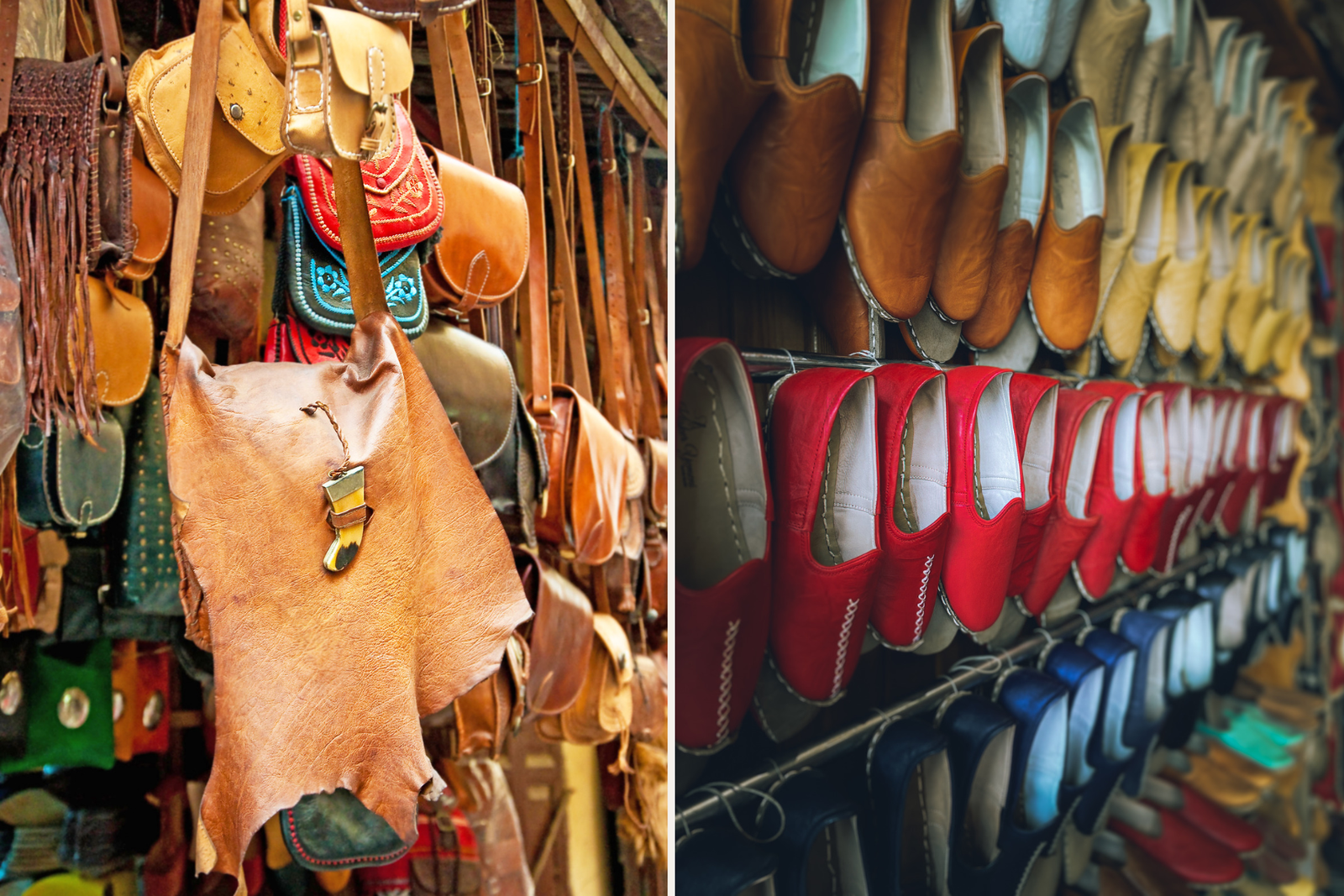
Leatherworking is an important part of traditional Moroccan craftsmanship. Marrakech's souks offer babouche slippers, bags, belts and leather poufs in a wide range of shapes and finishes.
To choose a durable piece, examine the stitching, flexibility of the leather, lining and quality of the fastenings. A particularly strong smell does not guarantee quality or authenticity.
Babouches are relatively easy souvenirs to bring home. A well-made leather bag can also become an everyday accessory rather than simply a decorative reminder of your trip.
Moroccan Pottery: Bowls, Plates and Tagines
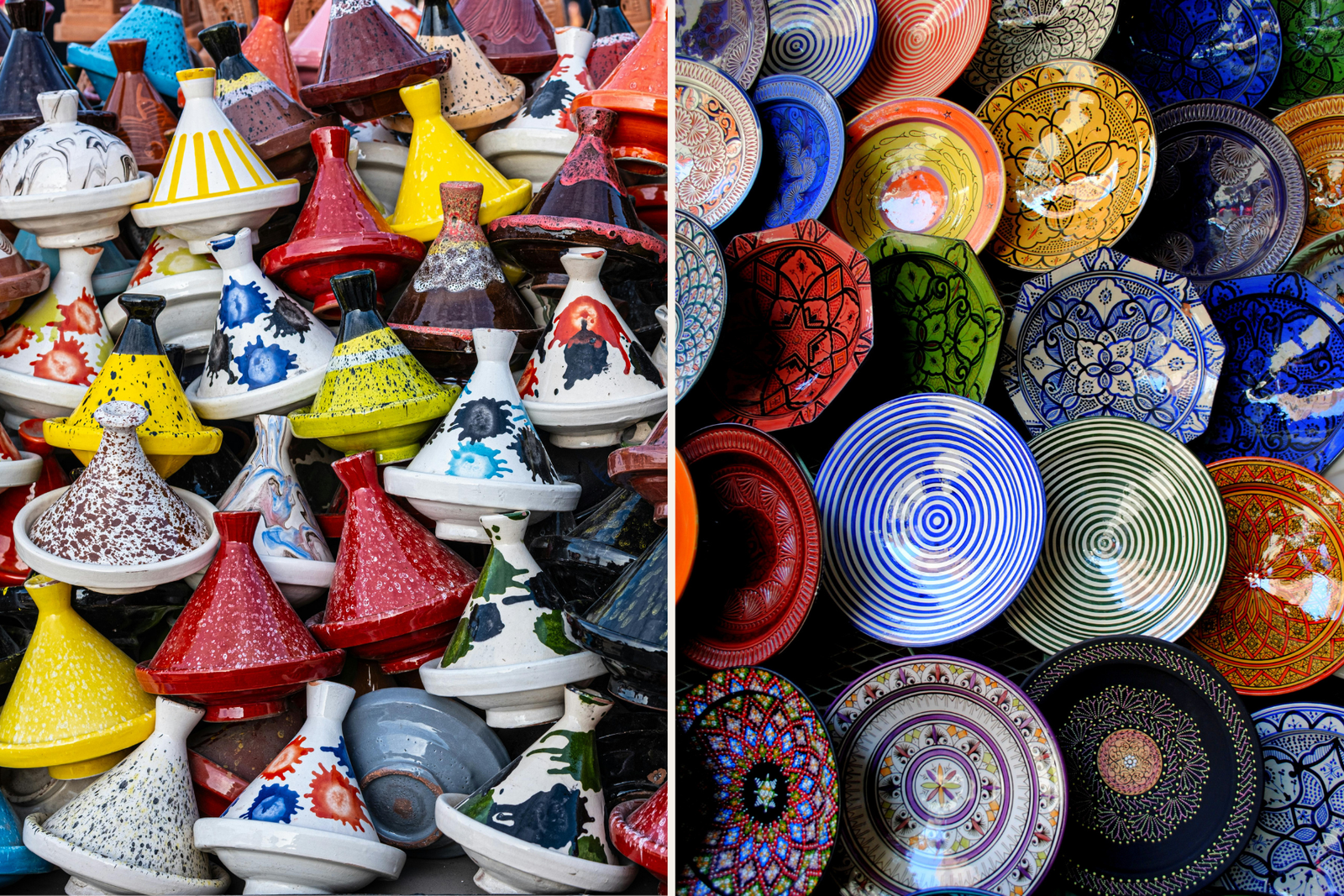
Moroccan pottery reflects regional craft traditions, particularly those associated with Safi and Fez. In Marrakech, you will find painted bowls, serving dishes, plates and tagines in a variety of colours and patterns.
If you intend to use a piece for cooking or serving food, check that it is suitable for food contact. A decorative tagine is not necessarily designed for cooking, and some handmade ceramics require particular care.
For travellers with limited luggage space, a small bowl or decorative plate is a more practical alternative to a large serving dish.
Moroccan Lanterns and Metalwork
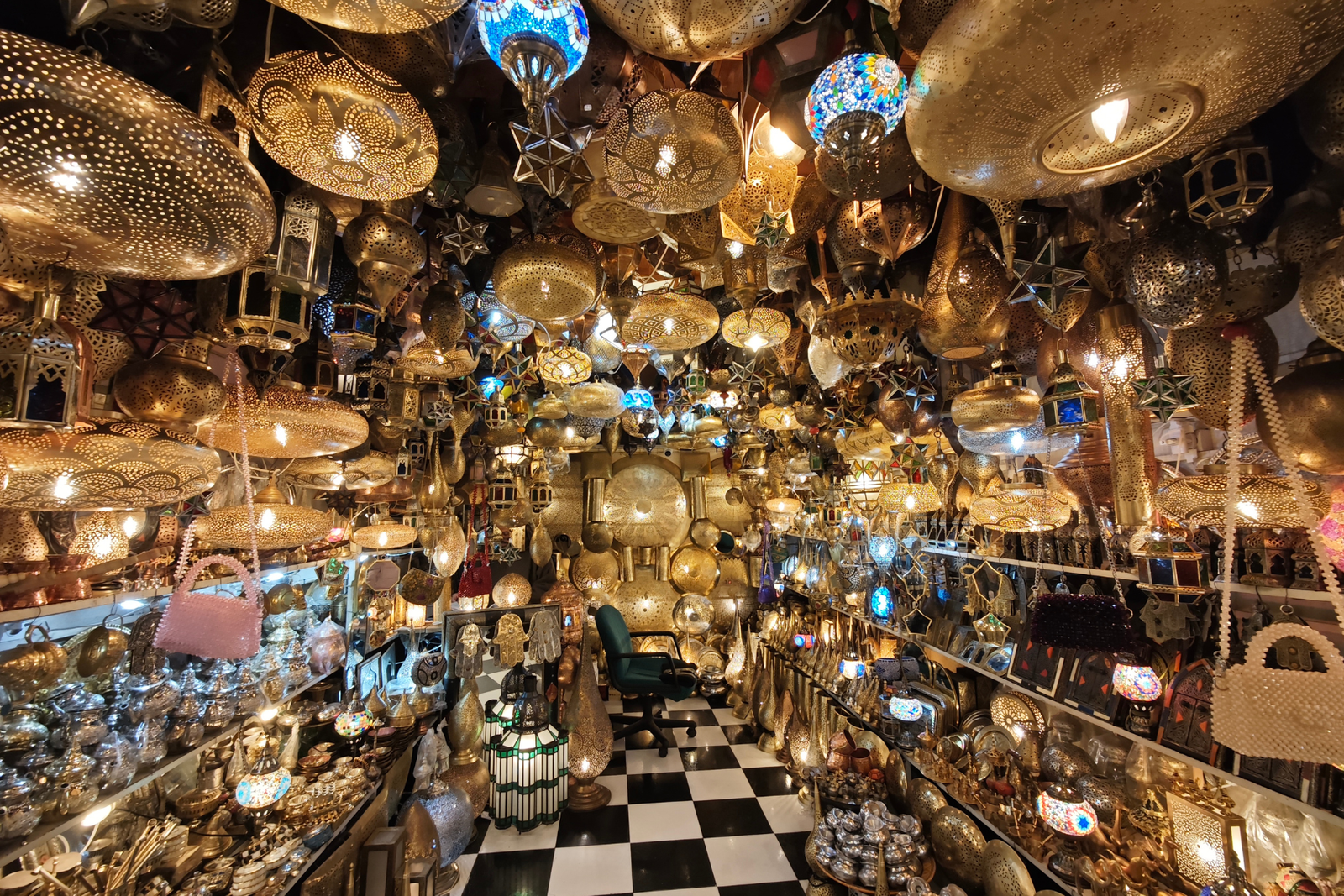
Pierced metal lanterns, decorative trays and brass objects are among the creations that immediately catch the eye in Marrakech's souks.
Their appeal lies in the cutting, hammering and finishing techniques involved. Look closely at the joints, the object's stability and the quality of its details.
Before buying a lantern, consider how you intend to use it. Some are designed to hold candles, while others are purely decorative.
What Spices and Natural Products Should You Bring Home from Marrakech ?
Marrakech souvenirs are not limited to home decoration. Spices and certain skincare products allow travellers to bring elements of Moroccan culinary and wellness traditions into their daily lives.
Popular purchases include ras el hanout, cumin, paprika and saffron. For saffron in particular, choose a seller who can explain its origin and provide clearly labelled packaging.
Argan oil is another sought-after product, but it is important to distinguish culinary oil from cosmetic oil. Check the ingredients, labelling and storage instructions. A demonstration in a shop is not sufficient evidence of purity.
Moroccan black soap and ghassoul clay can complete the selection, especially for travellers interested in traditional hammam rituals.
Prefer properly packaged products and check your home country's customs regulations before transporting food or natural products.
Where Are the Best Places to Shop in Marrakech ?
Marrakech Souks: Discover Traditional Craftsmanship
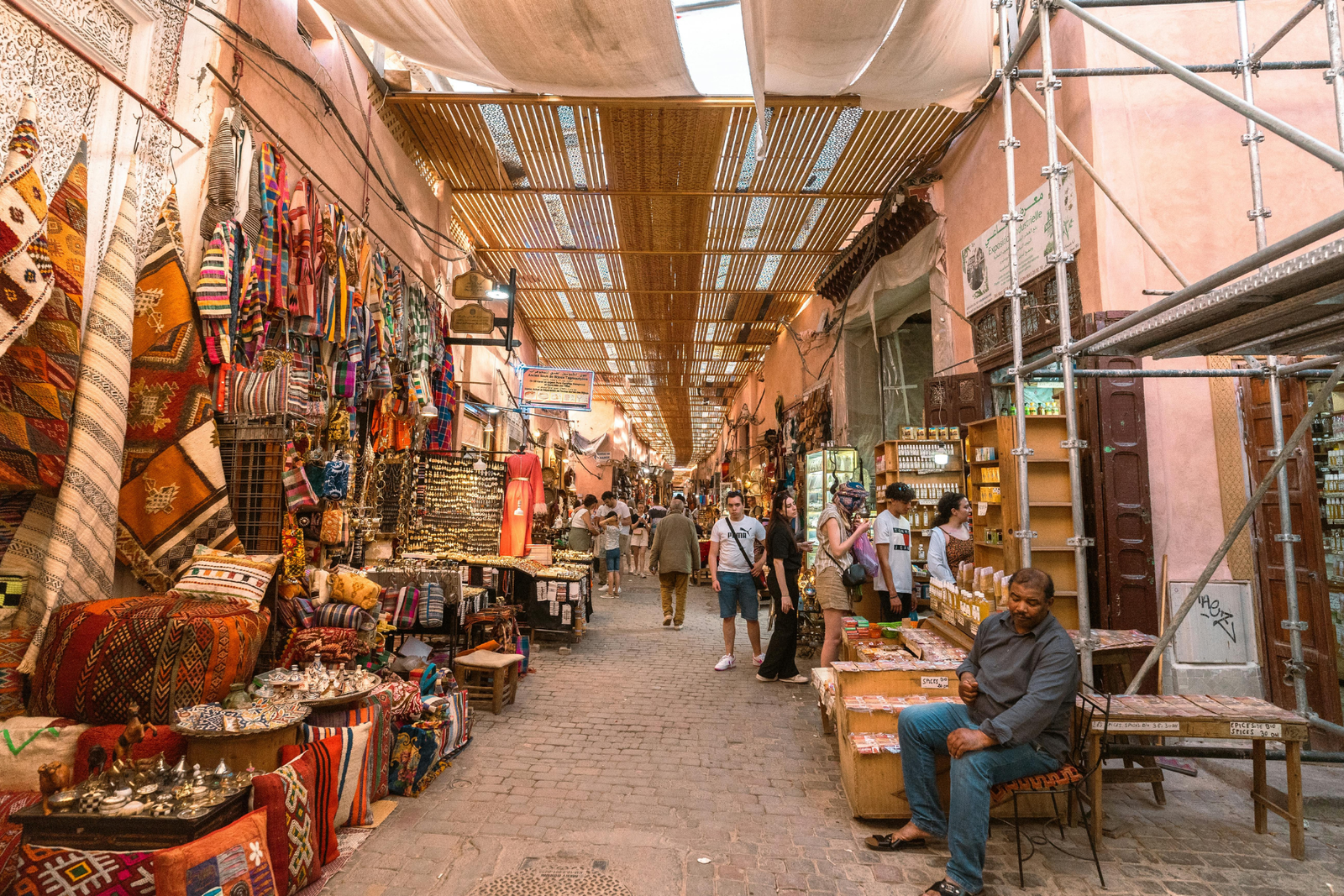
The Marrakech souks remain the most obvious starting point for discovering local craftsmanship. Along the streets surrounding Jemaa el-Fna, shops appear one after another, although certain areas retain historical specialisations.
Souk Semmarine is an important commercial thoroughfare. Souk Cherratine is associated with leatherworking, while Souk Haddadine has historical connections to metalworking.
These specialisations are not always strictly maintained today. Take time to explore different shops rather than assuming each souk sells only one type of product.
If your time in the city is limited, you can combine a visit to the souks with other essential stops using our one-day Marrakech itinerary.
Ensemble Artisanal: Compare Handmade Creations
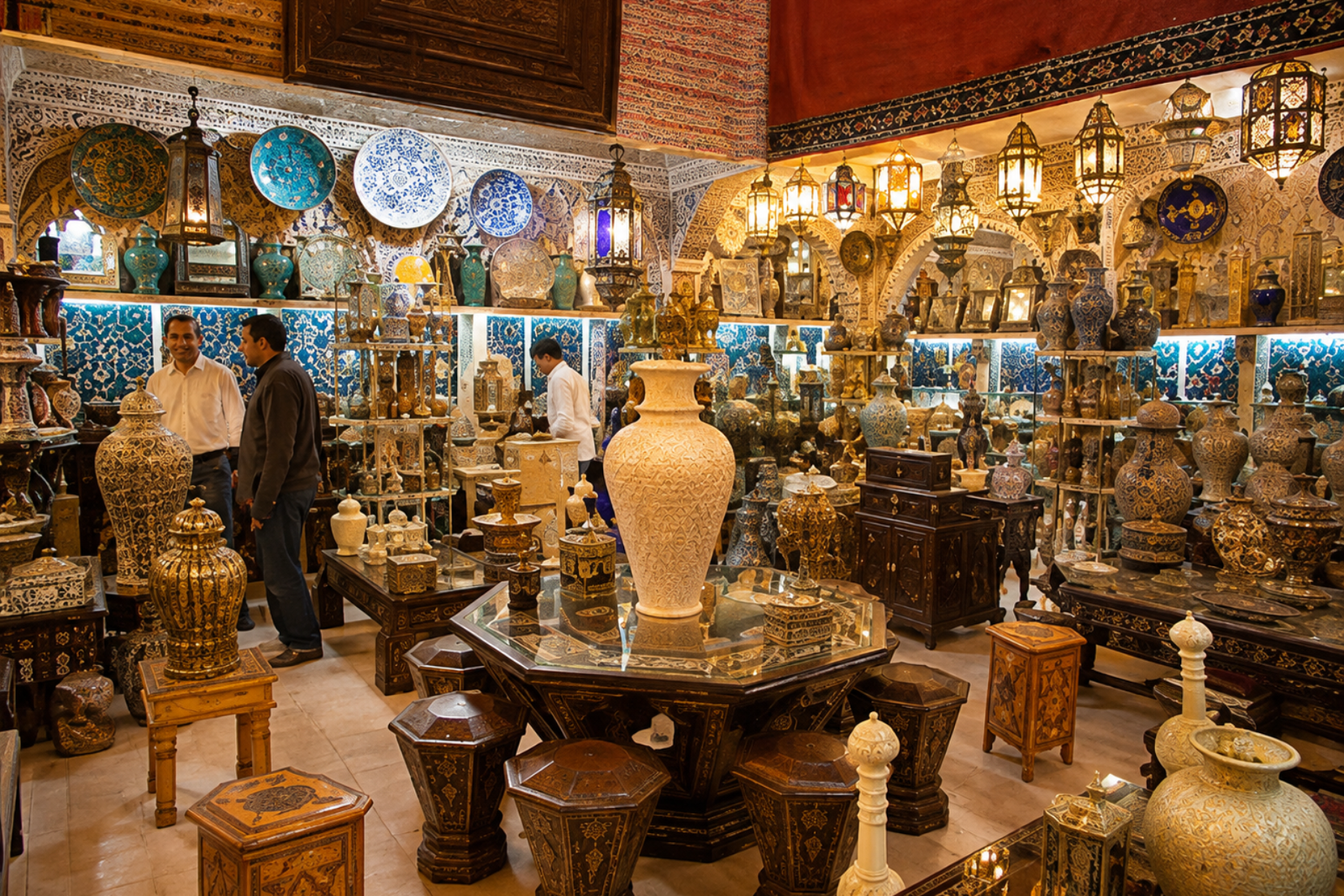
Marrakech's Ensemble Artisanal offers an alternative way to discover different categories of Moroccan handicrafts in a more organised setting.
It can also be a useful place to compare products before exploring the souks, where prices and opportunities for negotiation vary between sellers.
Guéliz: Contemporary Boutiques and Moroccan Design
The Guéliz neighbourhood offers a different approach to shopping in Marrakech. Its boutiques include home decoration, textiles, accessories and objects that sometimes combine traditional craftsmanship with contemporary design.
It is a good option for travellers seeking more understated pieces or interested in modern interpretations of Moroccan artisanal traditions.
How Can You Recognise Authentic Moroccan Handicrafts ?
An object sold in the souks is not automatically handmade. Some products are manufactured industrially, sometimes outside Morocco, and sold alongside artisanal creations.
To evaluate a purchase, ask a few straightforward questions:
Where does the object come from ? Can the seller identify its region or workshop?
What materials were used ? Wool, leather, clay, wood and metal each have distinct characteristics.
How was it made ? Ask which stages of production were completed by hand.
Can you examine the finishing ? Stitching, weaving, joints and surfaces can reveal the quality of the work.
Handmade production does not necessarily mean an object is unique, and a high price is not proof of authenticity.
What matters most is choosing transparent sellers who can explain where their products come from or demonstrate an understanding of the craftsmanship involved.
How Do You Bargain in the Marrakech Souks ?
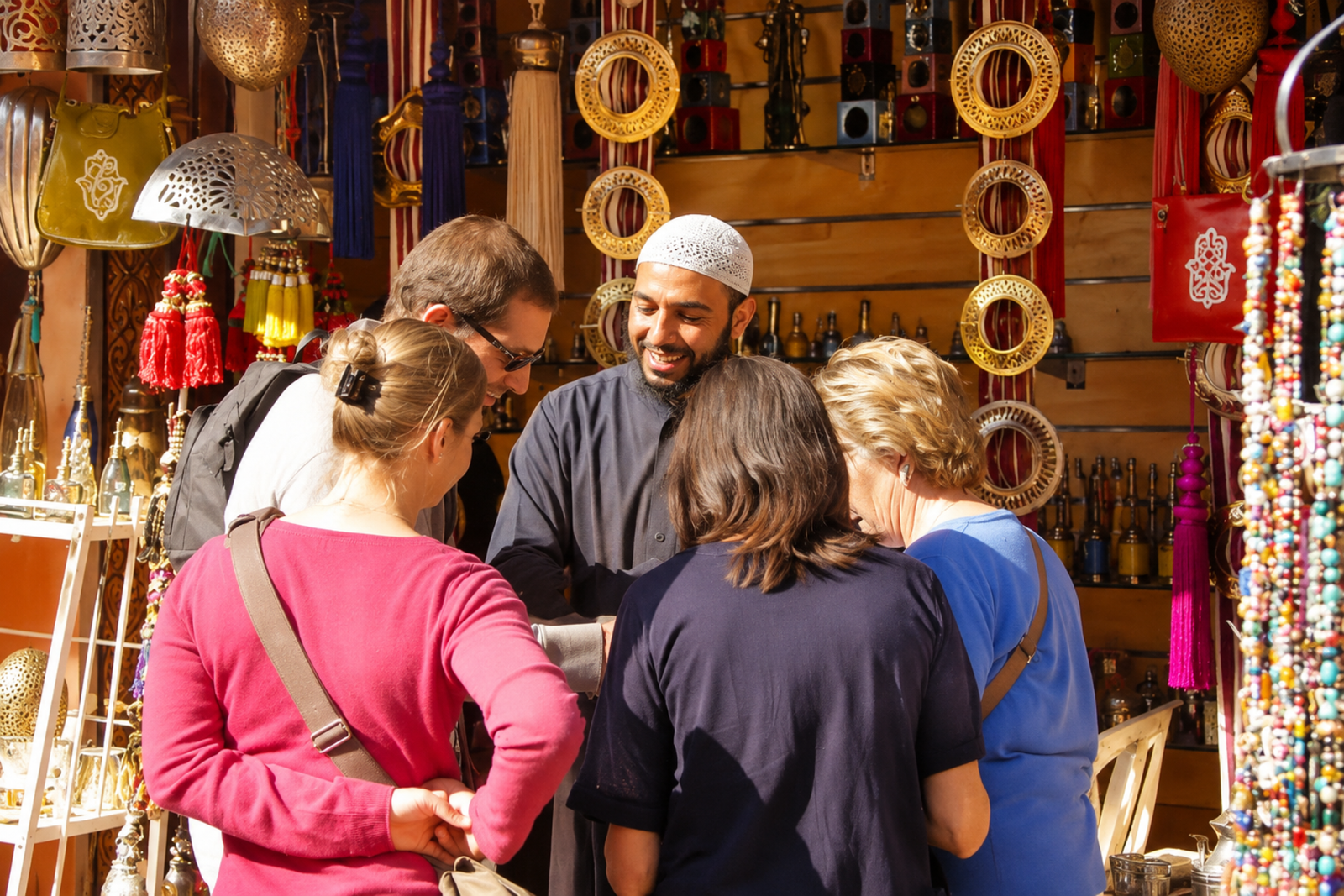
Bargaining is part of the shopping culture in many Marrakech souks, but it is neither compulsory nor universal.
In some shops, particularly those displaying fixed prices, negotiation is not expected. Elsewhere, the initial asking price may be the beginning of a conversation.
Before negotiating, compare several products of similar quality. Decide what you are comfortable paying and remain polite. You can make an offer below the asking price and work towards a reasonable agreement.
Avoid spending a long time negotiating for an object you have no intention of buying. If the price does not suit you, it is perfectly acceptable to thank the seller and continue exploring.
The goal is not necessarily to secure the lowest possible price, but to make a purchase that feels fair.
For travellers who would rather spend less time organising the practical details of their stay, lifestyle management services can provide a useful perspective on how personalised assistance differs from standard travel arrangements.
What Should You Know Before Bringing Purchases Home from Marrakech?
Before finalising a purchase, think about transportation and how you will use the object once you return home.
Ceramics need careful protection against breakage. Large rugs may require special packaging or shipping arrangements. For expensive objects, request a detailed invoice and ask about international delivery conditions.
Also check the customs restrictions that apply in your destination country, particularly for food products, animal or plant materials and antiques.
If you want to dedicate part of your stay to discovering workshops and traditional crafts, an experience focused on local artisans can add another dimension to your time in Marrakech.
Marrakech also offers a very different atmosphere during the festive season. Travellers planning a winter visit can explore our guide to Morocco New Year's Eve for ideas on dining, destinations and celebrations.
What Should You Buy in Marrakech for a Meaningful Souvenir ?
The best souvenir from Marrakech is not necessarily the largest or most expensive. It might be a small ceramic bowl, a pair of babouches, a carefully chosen textile or an object whose making you have had the opportunity to discover.
Shopping in Marrakech becomes more rewarding when you take time to understand the materials, techniques and people behind the creations.
At Leonis Collection, we see these discoveries as an integral part of the travel experience. Beyond accommodation, encounters with local craftsmanship offer another perspective on Marrakech. Through our private concierge services, travellers can explore personalised experiences and arrangements that complement their stay, and sometimes bring home much more than a souvenir.


Be the first to leave a thoughtful comment.